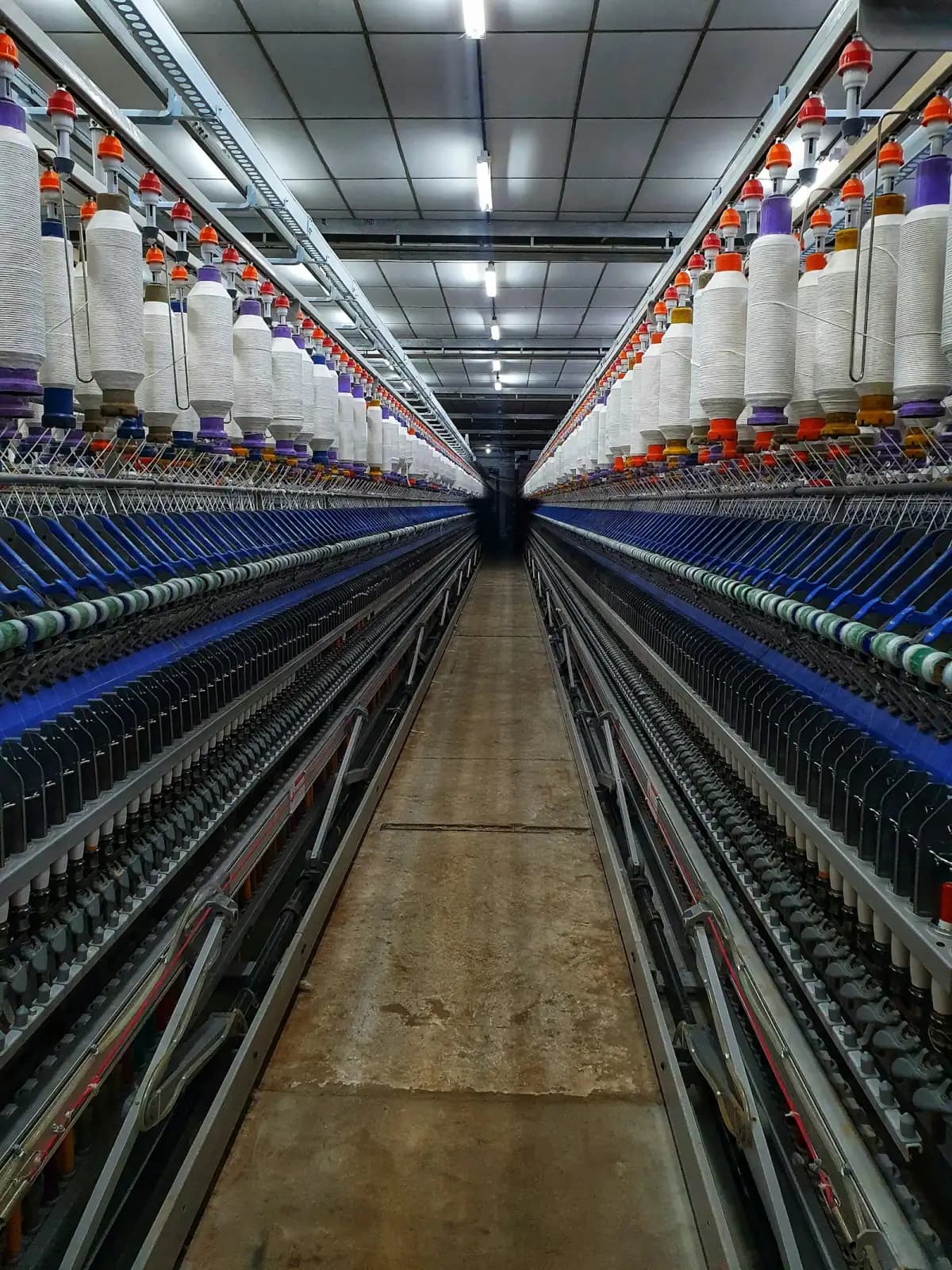
Fabric Defects: Detection 10x Faster Than Manual Inspection
Why Manual Fabric Inspection Falls Short
Textile inspection has been a manual job for a hundred years and the limits are well known. A trained inspector watching a lit table can catch 60-80% of defects on a roll of fabric, the rest slip through because the inspector blinks, the lighting shifts, or the defect is too subtle for the human eye to register at 25 meters per minute. The cost of missed defects compounds downstream: cutting tables produce defective garments, finished goods get returned by retailers, and the mill ends up paying for fabric that never should have been shipped.
What AI Fabric Defect Detection Actually Does
AI fabric defect detection uses cameras over the inspection table or weaving loom to capture every meter of fabric at high resolution. A deep learning model trained on thousands of defect images flags each anomaly in real time, marks the defect type and location, and stores it against the roll ID. The system handles speeds of 20 to 60 meters per minute with 98%+ accuracy on trained defect classes, far above what a human inspector achieves over an 8-hour shift.
Defect Classes the System Catches
A production-grade AI fabric inspection covers all the main defect categories textile mills encounter:
- Weave defects: missing picks, broken ends, slubs, knots, holes, and tears.
- Color defects: shade variations between rolls, streaks, barré, spot stains, oil marks.
- Print defects: registration errors, smudging, faded sections, missing print zones.
- Surface defects: snags, abrasions, fiber irregularities, lint contamination.
- Dimensional defects: width variations, edge irregularities, length deviations.
- Finishing defects: uneven coating, wrinkles, scorch marks, residue.
Integration With Existing Inspection Tables
One of the biggest practical concerns from mill operators is whether they need to replace the inspection machines they already own. The answer in 2026 is no. AI inspection systems retrofit onto existing tables by mounting line-scan or area-scan cameras above the running fabric, with edge inference units mounted on the side. The mechanical part of the inspection table, the let-off, take-up, lighting and operator station, stays as it is. The retrofit typically takes 1-2 days of installation.
Marking, Cutting and Traceability
When a defect is detected, the system can do three things, often in parallel:
- Print a paper or RFID marker on the selvedge at the defect position so downstream cutting tables know to avoid it.
- Log the defect with type, severity, and meter position against the roll record for traceability.
- Send an alert to the operator dashboard so the inspector can review borderline cases.
Building Models for Your Fabric Mix
Generic fabric models do not work well across mills. A model trained on denim will not transfer to polyester knits, and a model from a European mill will not transfer to Latin American cotton without retraining. The right workflow is to start with a base model and fine-tune on samples from your own production, 200-500 labeled samples per fabric type typically gets the system into production-ready performance within a week of go-live.
Already running a fabric inspection machine?
CondorVision integrates with your existing inspection rig to catch knots, stains and broken threads 10x faster than manual review.
See textile solutionRejection Rate Reduction in Practice
An intelligent fabric inspection machine is superior to manual inspection because it catches more defects, but the business outcome that matters is the reduction in rejected rolls and downstream waste. Mills that have moved from manual to AI inspection typically report:
- 30-40% reduction in rejection rate at the cutting table because defective sections are flagged and skipped.
- 50% reduction in manual inspection labor cost as the AI handles the 100% sweep.
- 70% faster defect-rate reporting per shift, line, and product, enabling proactive process adjustments.
- 20% improvement in fabric yield by reducing over-conservative cuts around suspected defects.
Manual inspection catches 60% of defects on a good day and 40% on a bad one. AI catches every defect every day, and the rejection rate at the cutting room shows the difference.
What Makes a Good AI Fabric Inspection System
If you're evaluating systems, these are the must-have capabilities:
- Coverage of all six defect categories above on a single platform.
- Line speeds matching your mill: 20-60 m/min minimum, higher for fast looms.
- Customer-specific model training, not generic factory-floor models.
- Real-time defect marking on selvedge or via RFID tag.
- Integration with cutting room software (Gerber, Lectra, Optitex).
- Dashboard with defect rate per loom, shift, fabric, and operator.
- Audit trail with timestamped images for customer claim resolution.
ROI Reality
For a medium-sized mill running 5 looms or 3 finishing lines, AI fabric inspection typically achieves payback in 10-14 months. The main savings come from reduced rejection at the cutting room, lower manual inspection labor, and the value of proactive process adjustment from real-time data. Mills exporting to demanding markets (apparel for European retailers, technical textiles for automotive) often see faster payback because customer claim costs are higher.
Frequently asked questions
AI fabric defect detection uses cameras and deep learning to inspect every meter of fabric on a loom or inspection table in real time, identifying defects by type, severity and location with 98%+ accuracy.
Keep reading

12 Packaging Defects That Trigger the Worst Recalls
From broken seals to misaligned labels, the 12 packaging defects that cause the most expensive recalls in manufacturing. See real examples, root causes, and how automated inspection catches each defect before it leaves your plant.
Packaging Defects: AI, Machine Vision or Manual Sampling?
Choosing the right defect detection system for a packaging line is harder than it should be. We compare the four approaches in production today, AI inspection, traditional machine vision, manual sampling, and X-ray, across cost, coverage and ROI.
AI AOI for SMT Lines: 60% Fewer False Positives Than Classic AOI
Traditional AOI was built for a simpler era of PCB manufacturing. AI-powered visual inspection rewires the SMT quality loop with sub-200 ms decisions, 60% fewer false positives, and models that adapt to every new board on the line.
CATCH EVERY DEFECT, ON EVERY ROLL
See how AI fabric defect detection retrofits onto your existing inspection tables. Get a tailored assessment for your mill.
REQUEST AN ASSESSMENT